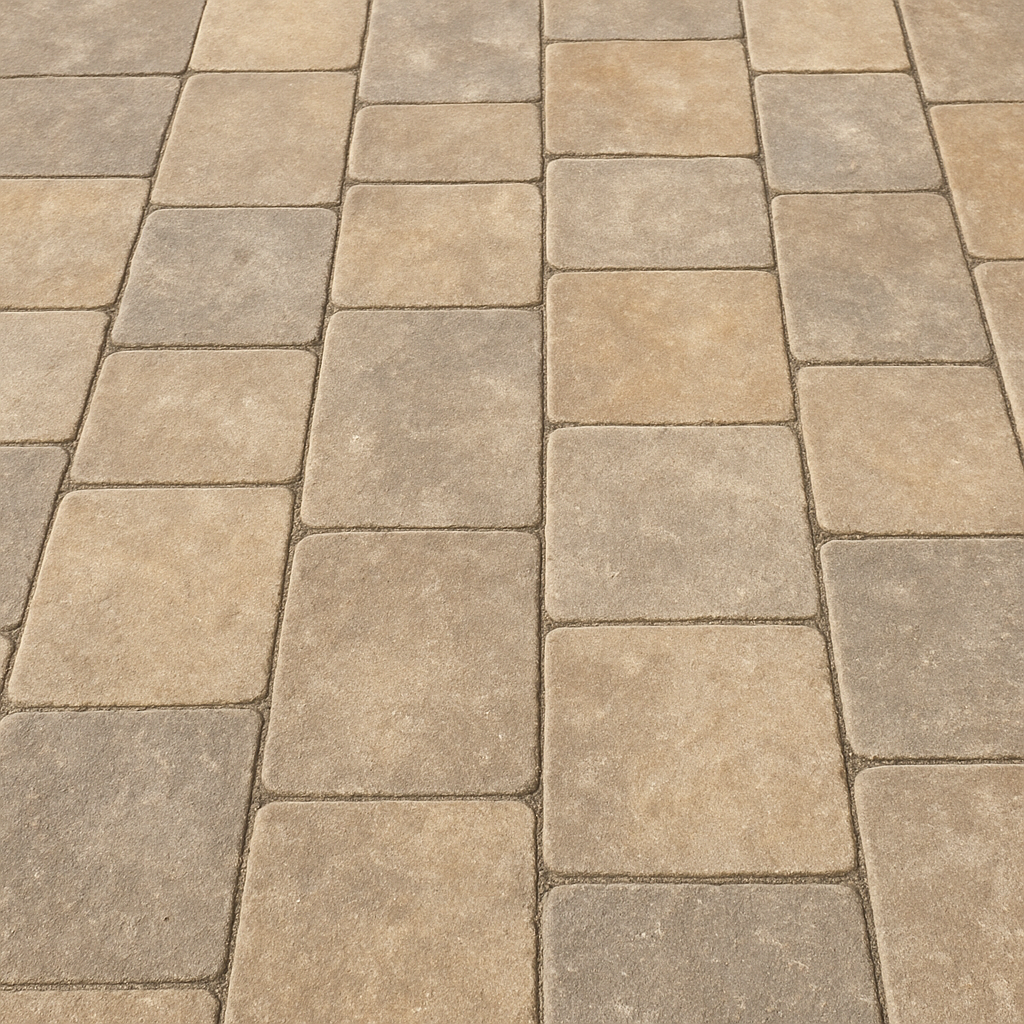
A clean patio can completely transform an outdoor space, but not everyone owns a pressure washer.
The good news is that learning how to clean a patio without a pressure washer is not only possible, but often a safer and more controlled way to care for your patio.
Manual patio cleaning is often recommended for older paving, delicate surfaces or areas where high pressure could loosen joints or damage the surface finish.
As outdoor cleaning experts since 1877, Jeyes Fluid has helped generations of homeowners keep patios, paths and outdoor areas clean, hygienic and well cared for.
In this guide, we’ll walk you through practical, proven methods to clean your patio without using a pressure washer.
What You’ll Need to Clean a Patio by Hand
Cleaning a patio without a pressure washer doesn’t require specialist equipment, but having the right tools and products will make the job easier, more effective and far less time-consuming.
Below is a list of essential tools you should have before starting:
- A stiff outdoor brush – Essential for loosening dirt, algae and grime from paving slabs and joints
- A bucket – For mixing and applying your cleaning solution
- Protective gloves – To keep hands clean and comfortable during scrubbing
- A watering can or hose – For rinsing the surface once cleaning is complete
These simple tools give you far greater control than a pressure washer, allowing you to focus on problem areas without damaging the surface of your patio.
Choosing the Right Patio Cleaner
While household detergents are sometimes used, they are rarely designed for outdoor conditions and can struggle with stubborn grime, algae and organic growth.
For best results, it’s important to use a cleaner formulated specifically for patios and paving.
A dedicated patio and decking cleaner is designed to break down outdoor dirt effectively while being suitable for use on common patio materials. Jeyes Fluid offers a range of trusted solutions developed for real-world outdoor cleaning, available within our Patio & Decking Cleaner collection.
With the right tools and a purpose-made cleaner to hand, you’re fully prepared to tackle your patio cleaning confidently - without the need for high-pressure equipment.

How to Clean a Patio Without a Pressure Washer
This step-by-step method is designed to deliver reliable results without risking damage to your patio.
Step 1: Clear the Patio Surface
Start by removing all furniture, plant pots and decorative items from the patio.
Sweep the area thoroughly to get rid of loose dirt, leaves and debris. This initial step is important, as it allows your cleaning solution to work directly on the surface rather than being blocked by surface grime.
Pay particular attention to corners and edges, where debris often collects and encourages algae growth.
Step 2: Apply Your Patio Cleaner
Once the surface is clear, prepare your patio cleaner according to the manufacturer’s instructions.
Using the correct dilution ensures effective cleaning while protecting your paving and surrounding plants.
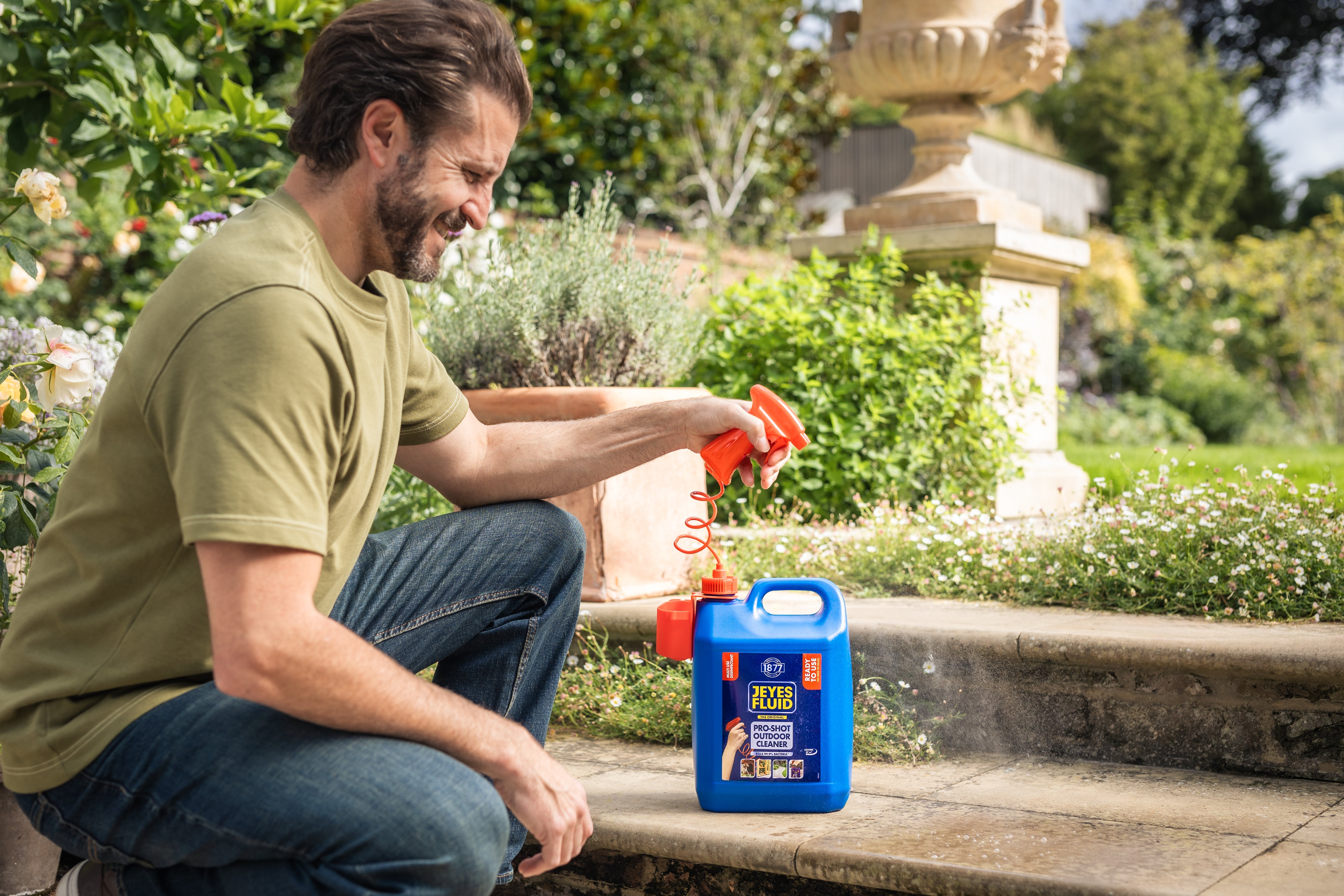
Apply the solution evenly across the patio using a watering can, bucket or brush. For best results, work in manageable sections so the cleaner does not dry out too quickly.
A specialist product such as Jeyes 4-in-1 Patio & Decking Cleaner is designed to break down outdoor dirt, algae and grime without the need for high-pressure water.
Always wear gloves and avoid splashing, especially near lawns or planted areas.
Step 3: Scrub the Surface Thoroughly
After allowing the cleaner to sit for the recommended time, use a stiff outdoor brush to scrub the patio.
Work the brush firmly across the slabs, focusing on joints, textured areas and any spots with visible staining or algae.
This manual action is what replaces the force of a pressure washer, allowing you to target problem areas precisely without disturbing pointing or damaging the surface.
Step 4: Rinse and Inspect
Rinse the patio thoroughly with clean water using a hose or watering can. Ensure all residue is washed away, paying close attention to joints and low points where the solution can collect.
Once rinsed, inspect the area. Heavily soiled patios may benefit from a second application in particularly stubborn areas, but regular maintenance cleaning is usually enough to keep paving looking fresh and safe underfoot.
By following these steps, you can achieve a clean, well-maintained patio - all without the need for a pressure washer or specialist equipment.

Removing Algae, Moss and Stubborn Grime
Algae, moss and ingrained grime are some of the most common - and most frustrating - patio problems, particularly in damp or shaded areas.
Left untreated, these growths not only make paving look unsightly but can also create slippery surfaces that pose a safety risk.
Fortunately, they can be tackled effectively without resorting to a pressure washer.
Algae and moss thrive where moisture lingers, such as north-facing patios, areas beneath garden furniture or spots close to fences and walls.
While vigorous scrubbing will help, stubborn organic growth often needs a cleaner that is specifically designed to break it down rather than simply spreading it around.
Applying a specialist outdoor cleaner allows the solution to penetrate the growth and loosen it from the surface of the paving.
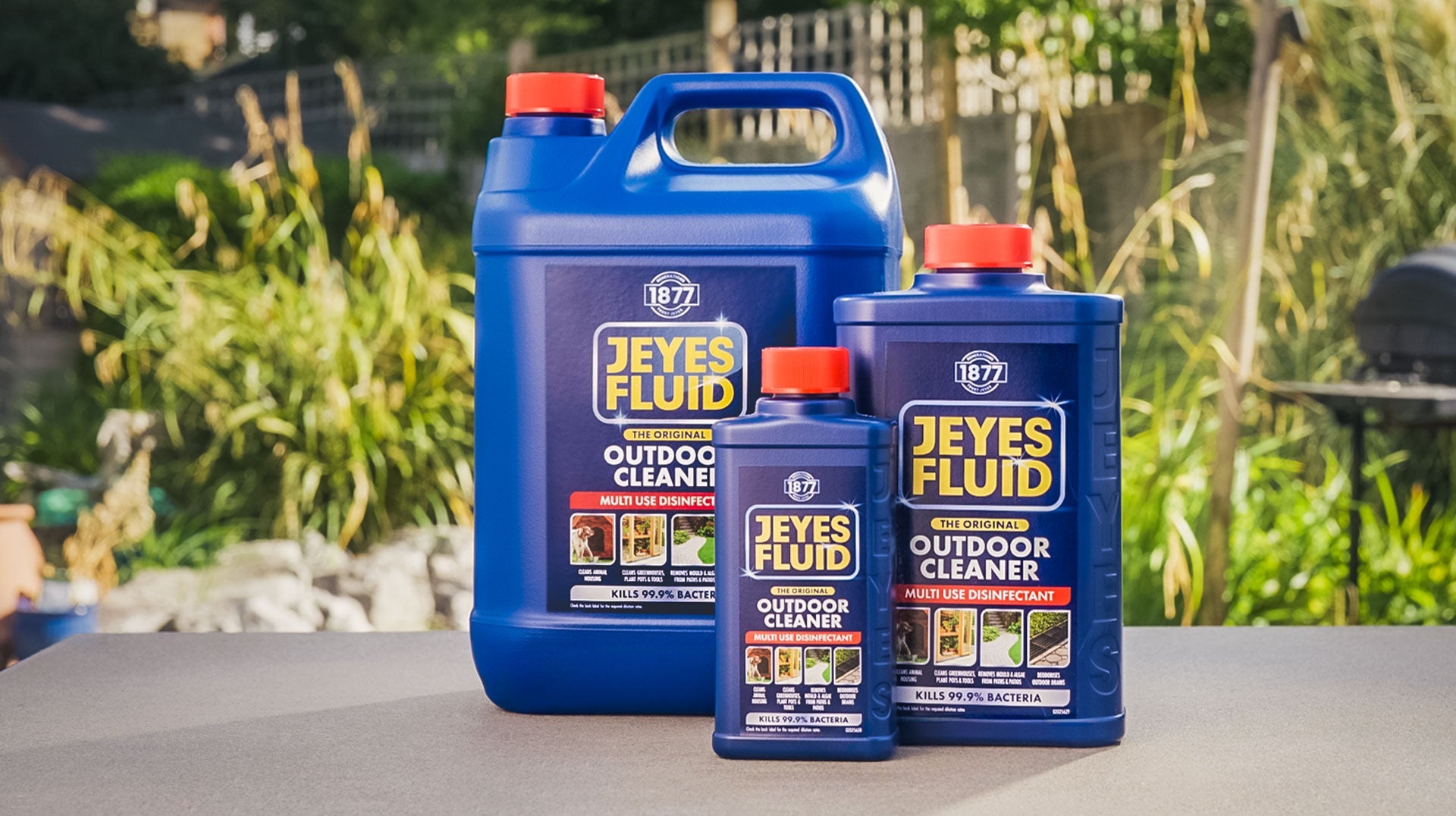
This makes manual scrubbing far more effective and reduces the amount of physical effort required. For patios affected by widespread grime or recurring algae, a versatile product such as Jeyes Multi-Use Outdoor Cleaner is well suited to the task, helping to lift dirt and organic matter across paving, paths and surrounding hard surfaces.
When dealing with heavier build-up, it’s best to focus on one section at a time. Allow the cleaner to work for the recommended period, then scrub thoroughly, paying particular attention to joints and textured surfaces where growth can anchor itself.
Rinse well and reassess before moving on to the next area.
Regular attention to algae and moss - rather than waiting until the problem becomes severe - will keep your patio looking cleaner for longer and help maintain a safer, more enjoyable outdoor space, all without the need for high-pressure equipment.
How Often Should You Clean Your Patio?
As a general rule, a thorough clean once or twice a year is sufficient for most patios - typically in spring to refresh the space after winter and again in autumn to remove summer build-up before colder, wetter months set in.
These deeper cleans help prevent dirt and algae from becoming ingrained and harder to remove later on.
In between, lighter maintenance makes a noticeable difference.
Sweeping your patio every few weeks helps remove debris that traps moisture and encourages algae growth.
If you notice green patches beginning to form or areas becoming slippery, addressing them early with a targeted clean is far easier than waiting until the problem spreads.
Tips to Keep Your Patio Cleaner for Longer
Once your patio is clean, a few simple maintenance habits can make a significant difference to how long it stays that way:
Regular Sweeping Makes a Real Difference
Sweeping your patio regularly is one of the most effective ways to prevent dirt and organic matter from building up.
Leaves, soil and plant debris trap moisture against the surface of paving slabs, creating the ideal conditions for algae and moss to develop. A quick sweep every couple of weeks - particularly during autumn and winter - helps keep surfaces drier and cleaner.
Tackle Algae Early
Algae is far easier to remove when it first appears. If you notice green patches starting to form, especially in shaded or damp areas, addressing them promptly with a suitable cleaner and light scrubbing will prevent the growth from spreading and becoming slippery.
Early intervention saves time and effort compared to dealing with heavy build-up later on.
Consider Protecting Your Patio Surface
For patios that are particularly prone to staining or organic growth, applying a surface protection product can be a worthwhile long-term solution. Sealers help reduce water absorption, making it harder for dirt, algae and moss to take hold in the first place.
Jeyes Fluid offers specialist solutions designed to protect masonry and paving once cleaned, helping to extend the results of your hard work.
Products within our Surface Protection & Grout Cleaning range are designed to support long-lasting cleanliness while maintaining the appearance of outdoor surfaces.
By combining regular maintenance with early treatment and, where appropriate, surface protection, you can enjoy a cleaner patio for longer - without relying on intensive cleaning methods or pressure washing.
Why Choose Jeyes Fluid for Patio Cleaning?

When it comes to caring for outdoor surfaces, experience matters. Jeyes Fluid has been helping households maintain clean, hygienic outdoor spaces for generations, with a heritage that stretches back to 1877.
Unlike general household cleaners, Jeyes Fluid outdoor solutions are developed with real outdoor conditions in mind; this means you can clean effectively without relying on aggressive methods such as pressure washing, which can damage patio surfaces over time.
Trust and reliability sit at the heart of everything we do. Our patio and outdoor cleaning products are created to deliver consistent results while being straightforward to use, allowing homeowners to clean with confidence and control.
Clear instructions, dependable performance and a focus on safety ensure you know exactly what to expect every time you clean.
You Are Ready!
By using simple tools, following a structured method and choosing products designed specifically for outdoor surfaces, you can remove dirt, algae and grime safely and thoroughly.
If you want to find the perfect solution to use for your patio cleaning, use our bespoke product selector.